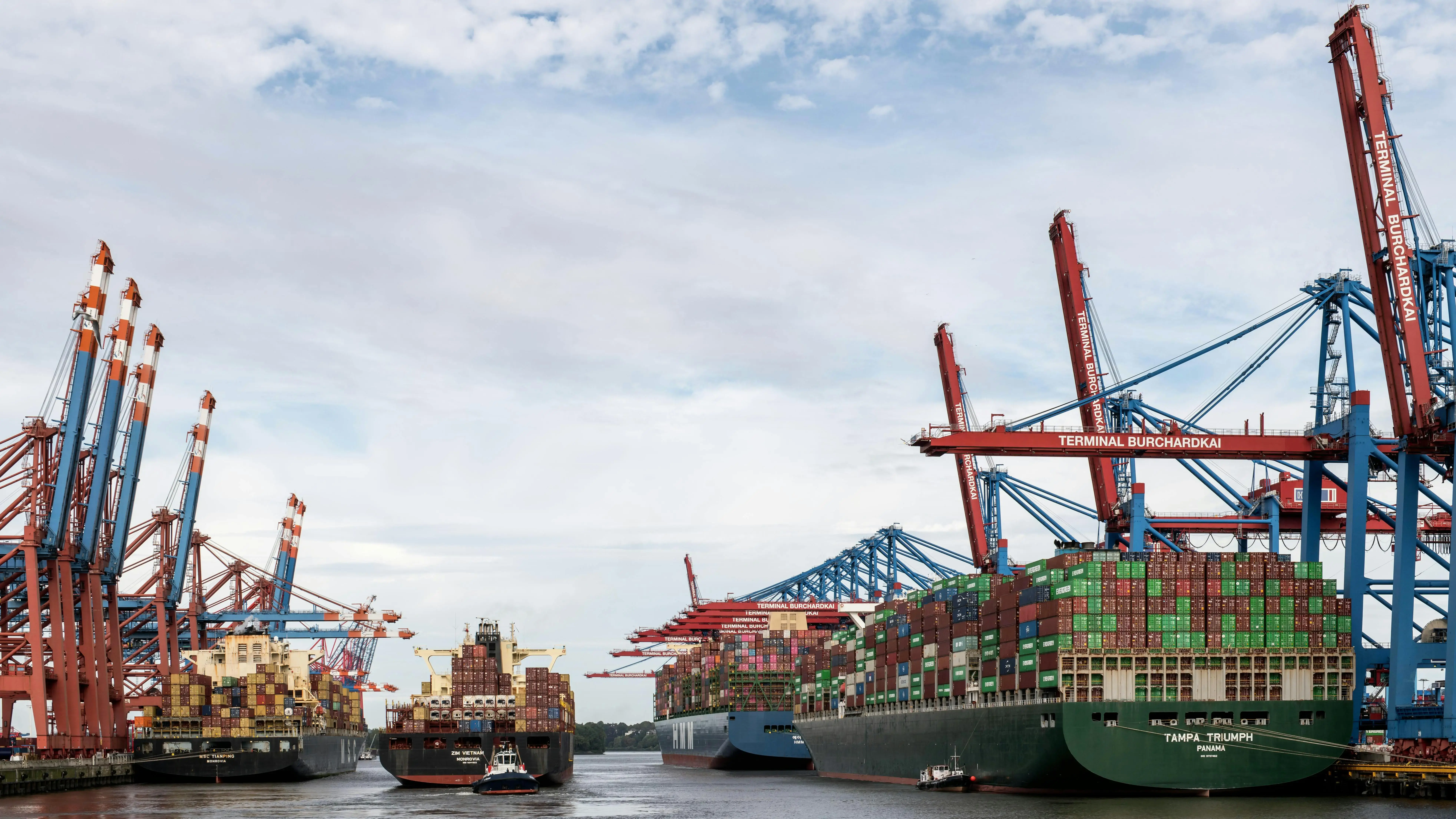

On February 20, 2026, the United States Supreme Court issued a 6-3 ruling finding that President Donald Trump violated federal law when he unilaterally imposed broad import duties on goods from trading partners across the globe. The decision invalidates the tariffs imposed under the International Emergency Economic Powers Act (IEEPA) — a development that may meaningfully affect US container import and export activity, container trucking demand, drayage scheduling, and freight transportation planning at ports and distribution points nationwide.
For container trucking operators, drayage providers, freight forwarders, and importers coordinating containerized cargo movement, this is the most significant trade policy development in over a year. The full downstream effects are still unfolding, and careful freight planning will be essential in the period ahead.
What the Supreme Court Decided
The IEEPA — the International Emergency Economic Powers Act — is a 1977 statute that grants the president emergency authority to regulate foreign transactions during a declared national crisis. The Trump administration used it to impose sweeping reciprocal import duties on goods from nearly every major US trading partner, as well as separate 25% duties on goods arriving from Canada and Mexico.
Chief Justice John Roberts, writing for the majority, held that IEEPA "does not authorize the President to impose tariffs." The Court found that the administration had asserted "extraordinary power to unilaterally impose tariffs of unlimited amount, duration, and scope" without the clear congressional authorization the law requires. Three justices dissented, arguing the tariffs were permissible under the statute.
This ruling does not eliminate all US tariffs. Duties imposed under separate legal authorities — including Section 301 tariffs on Chinese goods and sector-specific tariffs on steel and aluminum — remain in effect. It is the IEEPA-specific tariffs that are now ruled unlawful, and businesses should monitor closely whether the administration moves to re-impose equivalent duties under alternative statutes.
IEEPA-Based Duty Rates No Longer Enforceable
Based on current reporting, the following IEEPA-based import duty rates have been struck down:
- Mexico & Canada: 25% "Border" Tariffs — Removed
- UK, Germany, France: 10%–15% Reciprocal Caps — Removed
- Japan & South Korea: 15% Reciprocal Rates — Removed
- India & Brazil: 25%–50% Geopolitical Surcharges — Removed
It is important to note that the administration has indicated it intends to pursue alternative legal pathways to maintain elements of its tariff framework. Businesses engaged in container trade should not assume duty rates will return immediately to pre-2025 levels across all product categories and origins. Section 301 duties on Chinese-origin goods remain in place, and the administration may seek to re-impose some IEEPA rates under alternative statutes such as Section 232.
Impact on US Container Trade and Freight Volumes
The IEEPA tariffs imposed over the past year had a measurable effect on the cost of importing containerized goods from key trading partners, contributing to shifts in order volumes, sourcing decisions, and container flow patterns at major US ports and inland freight hubs.
With those duties now ruled unlawful, several container trade dynamics may begin to shift:
Import Container Volumes: Reduced landed costs for goods from affected countries could, over time, support a recovery in inbound container volumes at US ports. Importers who had scaled back order quantities or delayed shipments in response to elevated duty costs may reassess those decisions as the cost structure changes, potentially increasing container flow into US gateways.
Export Container Demand: Trading partners that introduced retaliatory measures in response to US IEEPA duties may revisit those actions following the ruling. If retaliatory barriers ease, demand for US export containers could see a gradual uptick, influencing outbound freight planning and carrier capacity requirements.
Freight Booking Cycles: Adjustments in import and export volume expectations may ripple through container booking lead times, vessel capacity allocation, and inland freight coordination schedules. Logistics operators should treat current forecasts as provisional until the trade policy picture stabilizes further.
Container Trucking and Drayage: Operational Considerations
At the ground level, any meaningful change in container import or export volumes could directly influence container trucking demand, drayage pull activity, chassis availability, and appointment scheduling at marine terminals.
If import volumes recover as landed costs decline for goods from affected countries, drayage operators may see increased container pull requests from terminals — particularly for consumer goods, automotive parts, and industrial cargo categories most directly affected by the removed IEEPA duties. Planning for potential upticks in container availability and trucking demand at major port gateways is a prudent step for drayage coordinators in the near term.
At the same time, if the administration moves swiftly to re-impose duties under alternative authorities, the pace of any volume recovery may be limited or delayed. The operational reality is that the trade policy environment remains fluid, and freight transportation planning should account for the possibility of further changes in the weeks and months ahead.
Container movements between marine terminals, rail yards, warehouses, and distribution centers may also be affected as importers recalibrate inventory strategies in response to shifting duty landscapes. Coordination between drayage providers, freight forwarders, and terminal operators will be important in managing any short-term fluctuations in container activity.
Potential Refunds: What Importers Should Know
If your business has imported containerized goods since February 2025 and paid IEEPA-based duties, you may be entitled to a refund of those duties. While there is potential for refunds in the future, the administration is expected to contest the ruling and has indicated it may seek to re-impose these rates using alternative statutes such as Section 232.
There is currently no guidance from US Customs on when and how refunds will be processed. As soon as official guidance becomes available, we will provide an update. The refund resolution process is likely to proceed through the lower courts and could take considerable time. Importers seeking to pursue refunds are strongly encouraged to consult qualified customs counsel for advice specific to their import history and cargo categories.
Strategic Freight Planning in an Uncertain Trade Environment
Trade policy shifts of this magnitude create both opportunity and complexity for businesses engaged in US container logistics. Here is how freight operators and importers may want to approach planning in the current environment:
Revisit landed cost assumptions. Importers who built elevated IEEPA duty costs into their pricing and sourcing models should reassess those assumptions — while maintaining contingency for the possibility of replacement tariffs under alternative authority.
Build flexibility into drayage and trucking schedules. Container volume projections that informed recent freight planning may need adjustment. Maintaining scheduling flexibility will help trucking and drayage operators respond efficiently to changes in container pull demand.
Stay current on replacement tariff actions. The administration has signaled it will move to preserve elements of its tariff framework under different legal authorities. Any replacement measures may affect different product categories or country origins than the IEEPA duties did, and changes may come with limited advance notice.
Consult licensed customs brokers. No freight transportation provider or logistics platform can substitute for the advice of a licensed customs broker or trade attorney with current working knowledge of applicable regulations. Regulatory guidance in this area is expected to evolve rapidly.
Disclaimer: This article is intended for informational purposes only and does not constitute legal, financial, or customs advice. Tariff regulations, duty structures, and import requirements change frequently and vary by country, product, and applicable law. Oakland Container Trucking strongly recommends that importers, exporters, and freight operators consult qualified legal counsel and licensed customs brokers for guidance specific to their circumstances. All information in this article reflects publicly available reporting as of February 20, 2026, and is subject to change.
Stay Prepared for Changes in US Container Trade
Trade policy is evolving rapidly, and the effects on container trucking demand, drayage operations, and freight transportation planning will continue to develop in the weeks ahead. Staying operationally prepared means having a reliable freight partner who understands how regulatory shifts translate into real-world logistics decisions.
Oakland Container Trucking provides professional container trucking and drayage services for importers, exporters, and freight operators moving containerized cargo across major US port gateways and inland distribution points. Whether you need container drayage coordination, trucking capacity for inbound or outbound freight, or support navigating shifting container volumes, our team is here to keep your cargo moving.
Calculate Your Drayage Costs and Plan Your Next Container Move
Contact OCT to discuss your container trucking and drayage needs, or to learn how current trade developments may affect your freight operations.

ILA Strike Disrupts U.S. Supply Chains: Economic Impact and West Coast Port Surge
.png)
Container Drayage in Oakland: Complete Guide for Importers & Brokers